

The Rise of One-Way Video Interviews: Efficient Hiring or Candidate Experience Disaster?
- Jun 17
- 2 min read
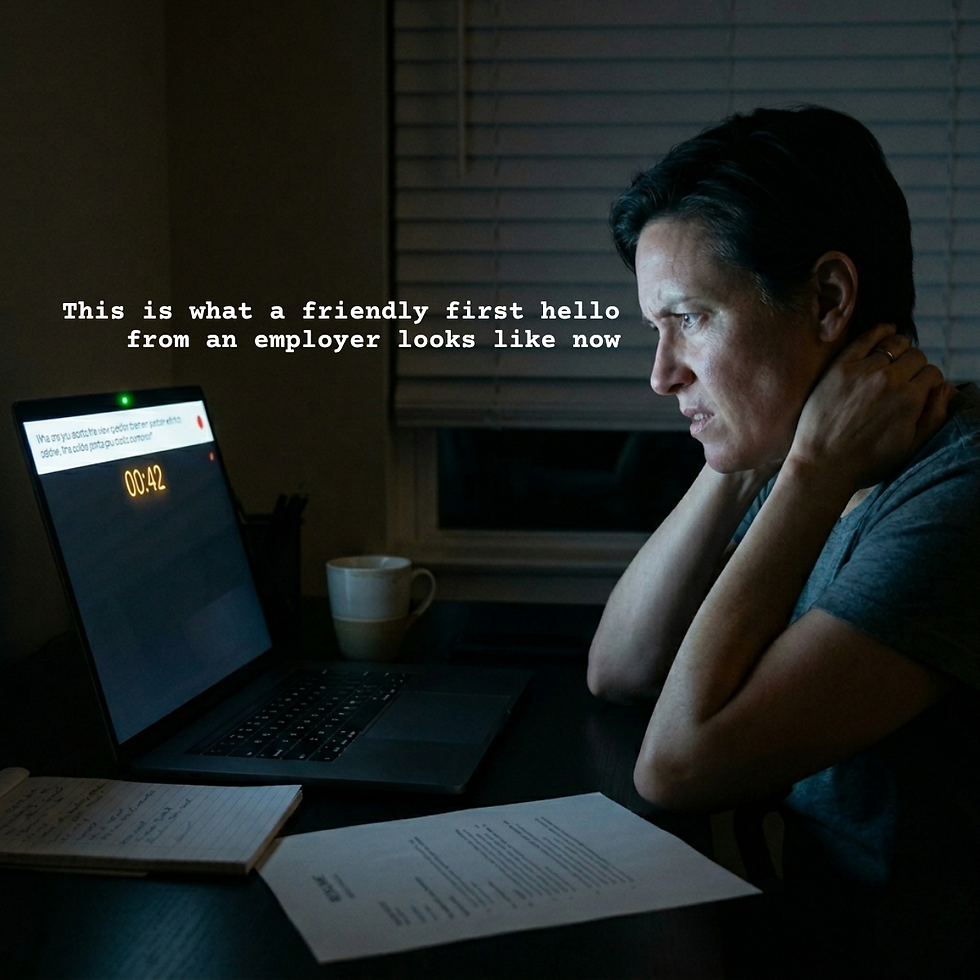
A Talentology community member sat through 30 minutes of a one-way interview this week. Camera light on, no one on the other end, countdown running between every question. The platform calls this a friendly, flexible first hello. Hmmmmm.....
I went and looked at how these things are actually built, because I wanted to know if what he described was unusual or just how the format works.
Turns out it's exactly how it's meant to work. Question appears, you get somewhere between thirty seconds and two minutes to think, then the timer starts again and you record.
Most platforms cap you at one or two minutes per answer. Plenty don't let you re-record at all. Once you submit, a human reviews it later, or increasingly, an AI tool scores it first and hands the hiring team a summary.
So none of what he described was a malfunction. That's just the product.
What's been sitting with me is what's actually driving the growth of these tools. Recruiters are buried under hundreds of AI-written resumes that all read the same. A senior role can pull 500+ applications now, most of them indistinguishable.
Nobody on the employer side has the capacity to deal with that volume the old way, so the answer has been another layer of tech, designed to make the employer's funnel faster. Candidate experience doesn't really come up in that brief.
And I keep thinking about how this lands for neurodivergent candidates specifically. Somewhere between 30 and 75 percent of autistic adults are unemployed or underemployed depending on the study, and one UK survey found half of neurodivergent job seekers had experienced discrimination during their search, with one in six losing an offer after disclosing.
Take away the ability to ask for clarification, add a hard countdown, and ask someone to perform fluently to a camera with no feedback at all. That's not a neutral design choice for a lot of people.
Wondering if anyone's had a better experience with these, from either side of the desk. Everything I've come across so far points the other way.


Comments